

Off-Grid Hybrid Inverter Architectures
An in-depth look at how multi-port hybrid inverters manage power distribution and routing between solar, storage, and auxiliary generator sources.

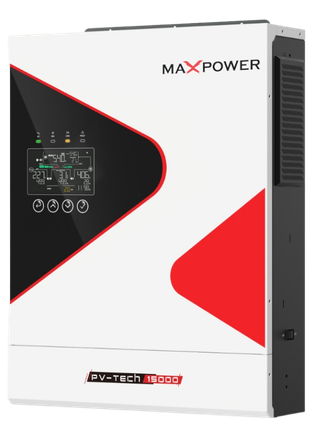
Decentralized Micro-Grids: The Internal Logic and Priority Control of Off-Grid Hybrid Inverters
The industrial-grade off-grid hybrid inverter acts as the centralized central processing unit (CPU) for advanced standalone micro-grids. Unlike standard string inverters, a multi-port hybrid inverter integrates a high-voltage solar charge controller ($MPPT$ ), a bidirectional bi-phase inverter, and an automated transfer switch into a single synchronized hardware platform. This architecture enables the system to manage and blend three distinct power vectors simultaneously: the primary PV array, the auxiliary lithium battery bank, and a localized diesel generator or utility grid line.
Power distribution is governed by programmable Priority Logic Control. Under nominal daytime operations, the inverter routes raw solar generation directly to satisfy localized load demands, seamlessly diverting any residual current to charge the lithium reserves.
If cloud coverage or peak loading causes a deficit, the inverter's ultra-fast transfer switch acts as an Uninterruptible Power Supply (UPS), drawing supplementary current from the battery bank within less than 10 milliseconds. This transition is fast enough to ensure that sensitive electronic networks and automated industrial machinery experience zero operational disruption. Furthermore, if prolonged deficits occur, the inverter utilizes programmable dry contacts to automatically trigger and engage localized backup generators.
Share this post:
Related Posts
A technical guide exploring how center pivots and heavy-duty submersibles operate seamlessly directl...
A comparative engineering overview of Lithium Iron Phosphate technology against traditional lead-aci...
A financial and engineering breakdown of how commercial and industrial enterprises calculate payback...